
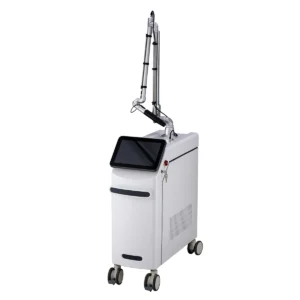
Buying a pico laser machine is not only about finding the lowest price.
For clinics, beauty salons and distributors, the real question is: Can this machine help you offer profitable treatments, stable results and reliable long-term service?
Pico laser machines are widely used for pigmentation treatment, tattoo removal, skin rejuvenation and skin tone improvement. But in the market, different machines can look similar from the outside while having very different performance, configurations and after-sales support.
This guide will help you understand what to check before choosing a pico laser machine for your business.
Quick Answer: What Makes a Good Pico Laser Machine?
A good pico laser machine should offer:
- Suitable wavelengths for pigmentation and tattoo removal
- Stable energy output during repeated treatments
- Practical spot size and handpiece options
- Reliable cooling system
- Clear treatment guidance for operators
- Good supplier support, warranty and spare parts service
For B2B buyers, the machine should not only “work.” It should also be easy to explain, easy to sell, easy to operate and reliable enough for daily business use.
What Treatments Can a Pico Laser Machine Support?
A pico laser machine is usually used for several high-demand aesthetic treatments.
Pigmentation and Spot Removal
Pigmentation is one of the most common concerns in aesthetic clinics. Clients may ask for treatment for freckles, sun spots, uneven skin tone or visible pigment spots.
For this application, buyers should not only look at high energy numbers. What matters more is whether the machine can deliver controlled and stable energy.
A professional pico laser should help operators adjust settings according to different skin concerns, treatment areas and client conditions.
Tattoo Removal
Tattoo removal is another important application of pico laser technology.
Different tattoo colors may require different wavelengths. Dark ink usually responds well to 1064nm, while red or lighter colors may require other wavelength options depending on the machine configuration.
For tattoo removal, buyers should pay attention to:
- Wavelength options
- Energy stability
- Spot size range
- Handpiece design
- Treatment speed
- Cooling and comfort
- Supplier training support
Tattoo removal usually requires multiple sessions. So the machine must be stable not only during a short demo, but also during long-term clinic use.
Skin Rejuvenation and Skin Tone Improvement
Many clinics also use pico laser treatments for skin rejuvenation and overall tone improvement.
This makes pico laser more than a “spot removal” or “tattoo removal” device. It can become part of a clinic’s skin management program.
For business owners, this matters because a machine with multiple treatment applications may create more service packages and more repeat customer opportunities.
Pico Laser vs Nd:YAG Laser: Which One Should You Choose?
Many buyers compare pico laser machines with Q-switched Nd:YAG laser machines before purchasing.
The main difference is pulse duration. Pico laser works with ultra-short picosecond pulses, while traditional Q-switched Nd:YAG lasers usually work in nanoseconds.
Here is a simple comparison:
| Item | Pico Laser Machine | Q-Switched Nd:YAG Laser |
|---|---|---|
| Pulse type | Picosecond pulse | Nanosecond pulse |
| Common applications | Pigmentation, tattoo removal, rejuvenation | Tattoo removal, pigmentation |
| Market positioning | More advanced, higher-end | Classic and practical |
| Business appeal | Strong for clinics promoting advanced skin treatments | Good for cost-effective treatment menus |
| Buyer focus | Technology, applications, stability, premium service | Practical use, price, basic treatment demand |
This does not mean one is always better than the other.
If your customers mainly need classic tattoo removal and pigmentation treatment at a practical cost, a professional 15Hz Nd:YAG Laser Machine may still be a good choice.
If your clinic wants to promote advanced pigmentation treatment, tattoo removal and skin rejuvenation programs, a Pico Laser Machine may give you stronger business positioning.
Key Specifications to Check Before Buying
Before ordering a pico laser machine, do not only ask for the price. Ask for the details that affect real treatment use.
1. Wavelengths
Common wavelengths may include 1064nm and 532nm. Some machines may offer additional wavelength options depending on configuration.
Different wavelengths are used for different pigment depths and tattoo colors.
Ask your supplier:
- What wavelengths are included?
- What is each wavelength used for?
- Are optional tips available?
- Which applications are most suitable for this model?
2. Pulse Duration
Pulse duration is one of the key points of pico laser technology.
Shorter pulse duration helps create a strong photoacoustic effect, which can break pigment or tattoo ink into smaller particles.
For buyers, this is not only a technical number. It affects treatment positioning, marketing value and customer confidence.
3. Energy Output and Stability
Some machines may show attractive energy numbers in a brochure, but what really matters is stable output during repeated use.
For clinics and distributors, stable energy means:
- More consistent treatment experience
- Better operator confidence
- Lower risk of unstable performance
- More reliable long-term use
Do not only ask “How strong is the energy?”
Also ask: Is the energy stable during continuous operation?
4. Spot Size and Handpieces
Different treatment areas require different spot sizes.
For pigmentation, tattoo removal and skin rejuvenation, flexible spot size options can help operators handle different cases more easily.
Check what handpieces and tips are included with the machine, and whether replacement parts are available later.
5. Cooling System
Cooling is important for both machine protection and client comfort.
A good cooling system supports more stable operation, especially when the clinic has regular treatment demand.
For business use, cooling should not be treated as a minor detail. It affects daily operation and long-term machine reliability.
Why Are Some Pico Laser Machines Much Cheaper?
Many buyers ask this question:
Why do pico laser machine prices vary so much?
The answer is simple: machines may look similar, but the inside can be very different.
Price differences may come from:
- Laser source quality
- Internal system design
- Energy stability
- Cooling performance
- Wavelength configuration
- Handpiece quality
- Screen and software system
- Warranty and after-sales support
- Packaging and shipping standard
A very cheap machine may reduce cost in places you cannot easily see from photos.
For B2B buyers, the cheapest option is not always the safest option. A machine that fails during customer treatments, lacks spare parts or has poor technical support can cost more in the long run.
The better question is not:
“What is your lowest price?”
The better question is:
“What configuration and support are included in this price?”
Common Buying Mistakes to Avoid
Mistake 1: Choosing Only by Price
Price matters, especially for distributors and new clinics. But if price is the only standard, buyers may ignore important details such as stability, handpieces, cooling and after-sales support.
A pico laser machine is a business tool. It should help you make money safely and consistently.
Mistake 2: Thinking All Pico Lasers Are the Same
Two machines may both be called “pico laser,” but their real performance may be different.
Before buying, compare specifications, applications, internal configuration and supplier experience.
Mistake 3: Ignoring Operator Training
Laser treatment is not only about the device. Correct operation also matters.
A reliable supplier should provide basic operation guidance, treatment suggestions and support materials to help the buyer use the machine properly.
Mistake 4: Buying Without a Clear Treatment Plan
Before purchasing, think about your business model.
Are you mainly offering pigmentation treatment?
Do your clients ask more about tattoo removal?
Do you want to build a premium skin rejuvenation program?
Are you buying for your own clinic or for local distribution?
Different business goals may require different machine configurations.
Quick Buyer Checklist
Before choosing a pico laser machine, check these points:
- Does the machine support your main treatment applications?
- Are the wavelengths suitable for pigmentation and tattoo removal?
- Is the energy output stable?
- What spot sizes and handpieces are included?
- Is the cooling system suitable for regular clinic use?
- Can the supplier provide real machine photos and videos?
- Is operation training available?
- Are spare parts and consumables easy to get?
- What is the warranty policy?
- Can the supplier support distributors or OEM needs?
This checklist can help you compare suppliers more clearly instead of only comparing prices.
Which Buyers Are Suitable for Pico Laser Machines?
A pico laser machine is suitable for:
- Aesthetic clinics offering pigmentation and tattoo removal
- Beauty salons upgrading their treatment menu
- Skin management centers offering rejuvenation programs
- Distributors looking for a high-demand laser product
- Clinics that want to position themselves with more advanced technology
For small salons, the key is to choose a model that is easy to operate and easy to explain to clients.
For clinics, stability and treatment flexibility are more important.
For distributors, product appearance, configuration clarity, supplier support and marketing materials also matter.
Recommended Related Products
If you are comparing laser equipment for pigmentation and tattoo removal, you may also review these related pages:
These pages can help you understand different laser technologies and choose the right solution for your market.
Final Thoughts
A pico laser machine can be a valuable device for clinics, salons and distributors. It can support pigmentation treatment, tattoo removal, skin rejuvenation and broader skin improvement services.
But before buying, do not only compare prices.
A good purchase decision should consider treatment applications, wavelengths, pulse duration, energy stability, cooling, handpiece design and supplier support.
For B2B buyers, the right machine should help you build reliable treatment services, improve customer confidence and support long-term business growth.
If you are looking for a professional pico laser machine for your clinic, salon or distribution business, you can contact iBeautyTech for specifications, product details and quotation support.